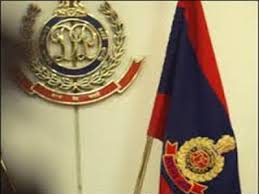
New Delhi (31.07.2025): The retirement of Delhi Police Commissioner Sanjay Arora on July 31, 2025, marks a pivotal moment for leadership within the force. This transition comes after a period where Delhi has seen its top police post filled by officers from outside the Joint AGMUT cadre that began in 1999 when a UP cadre IPS officer Ajay Raj Sharma was appointed as Delhi CP, a practice that was repeated in 2021 and continued up to July 31, 2025.
The "Double Engine" dynamic and past appointments:
The "Double Engine" narrative, often used to describe the alignment of the ruling party at both the central and state levels, faces scrutiny with the Delhi Police Commissioner appointment. Historically, with Arvind Kejriwal led AAP government in Delhi, the Centre appointed Rakesh Asthana (IPS: 1984: Gujarat) as Delhi Police Commissioner. This "extraordinary move" was followed by the appointment of Sanjay Arora (IPS: 1988: Tamil Nadu) as Asthana's successor, further departing from the joint AGMUT Cadre tradition.
Golcha leads the race; Ranjan, a strong contender in pursuit:
With Sanjay Arora's tenure concluding, expectations are high among joint AGMUT Cadre IPS officers for one of their own to lead the Delhi Police. Top sources indicate that Satish Golcha (IPS: 1992: AGMUT) leads the race who is known for his diverse skill set and strong grasp of headquarters operations. The second prominent contender is Praveer Ranjan (IPS: 1993: AGMUT) who is recognized for his operational expertise and field command.
While senior officers like Shashi Bhushan Kumar Singh (IPS: 1988) and Nuzhat Hassan (IPS: 1991) are also part of the AGMUT cadre, their relatively short remaining service—only six months—may be a disadvantage in the selection process.
What lies ahead?
The question remains whether Sanjay Arora, after a largely controversy-free three-and-a-half-year term, will indeed retire as scheduled, or if the Ministry of Home Affairs (MHA) will extend his service. The decision on the next Delhi Police Commissioner will undoubtedly be closely watched, particularly as it may signal a shift back towards appointing an officer from within the joint AGMUT Cadre, aligning with the expectations of the local force.
(By Rakesh Ranjan)