

New Delhi (12.07.2026): Amid the first monsoon showers of 2026, Prime Minister Modi’s re-emphasis on the slogan “Catch the rain, when it falls, where it falls” during his 135th Mann Ki Baat episode on June 28 has galvanized the central bureaucracy. This fresh momentum effectively overcomes a classic tale of internal politics that had initially slowed down the initiative’s potential.
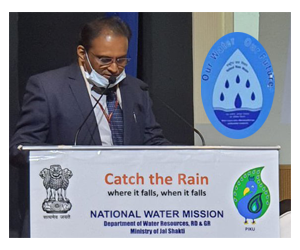
When a Telangana cadre IAS officer ideated the "Catch The Rain" blueprint in 2020, institutional resistance and professional rivalry from top ministerial echelons left it languishing in bureaucratic cobwebs. Contemporaries actively worked to blunt the initiative, intentionally omitting the catchphrase from official communications to avoid giving a single officer credit for the path-breaking campaign. The initiative remained stalled for years due to this internal friction before gaining high-level traction.
The bureaucratic logjam broke when Prime Minister Modi bypassed institutional inertia. Captivated by the idea, the PMO bypassed normal channels to request a conceptual note directly from former National Water Mission Director G. Asok Kumar—whom former Puducherry LG Kiran Bedi had once colloquially dubbed the "Rain Man"—subsequently launching the "Catch the Rain" campaign nationwide.
Modelled after the Aspirational Districts framework, the Centre deployed Central Nodal Officers to institutionalize grassroots rainwater harvesting under the Jal Shakti Abhiyan. Heavily backed by prime ministerial capital, the phrase has transitioned from a stalled file into the definitive catchline of India's water security doctrine. The mandate is now absolute for all ministries and states: the rain must be caught, regardless of any lingering bureaucratic friction.
Success Has Many Fathers: The Inside Story of a Purged Slogan That Became the PM’s Catchline
By IndianMandarins - 2026-07-12 10:14:00

New Delhi (12.07.2026): Amid the first monsoon showers of 2026, Prime Minister Modi’s re-emphasis on the slogan “Catch the rain, when it falls, where it falls” during his 135th Mann Ki Baat episode on June 28 has galvanized the central bureaucracy. This fresh momentum effectively overcomes a classic tale of internal politics that had initially slowed down the initiative’s potential.
When a Telangana cadre IAS officer ideated the "Catch The Rain" blueprint in 2020, institutional resistance and professional rivalry from top ministerial echelons left it languishing in bureaucratic cobwebs. Contemporaries actively worked to blunt the initiative, intentionally omitting the catchphrase from official communications to avoid giving a single officer credit for the path-breaking campaign. The initiative remained stalled for years due to this internal friction before gaining high-level traction.
The bureaucratic logjam broke when Prime Minister Modi bypassed institutional inertia. Captivated by the idea, the PMO bypassed normal channels to request a conceptual note directly from former National Water Mission Director G. Asok Kumar—whom former Puducherry LG Kiran Bedi had once colloquially dubbed the "Rain Man"—subsequently launching the "Catch the Rain" campaign nationwide.
Modelled after the Aspirational Districts framework, the Centre deployed Central Nodal Officers to institutionalize grassroots rainwater harvesting under the Jal Shakti Abhiyan. Heavily backed by prime ministerial capital, the phrase has transitioned from a stalled file into the definitive catchline of India's water security doctrine. The mandate is now absolute for all ministries and states: the rain must be caught, regardless of any lingering bureaucratic friction.