
Governance
Brahmaputra Drives Green Transport Shift as IWDC 3.0 Eyes Next Phase for Assam
By IndianMandarins- 21 Jan 2026
570New Delhi (21.01.2026): The third meeting of the Inland
Waterways Development Council (IWDC) will be held on January 23, 2026, at
Kochi, Kerala, with the objective of highlighting the achievements of the
Inland Water Transport (IWT) sector and outlining its future vision. The day-long session will be chaired by Union Minister
of Ports, Shipping and Waterways, Sarbananda Sonowal and will be attended
by Minister of State for Ports, Shipping and Waterways, Shantanu Thakur
along with ministers from various state governments. During the meeting, the Minister of Ports, Shipping and
Waterways will launch new initiatives to further develop inland water transport
in various states. Several State Support Agreements are also expected to be
signed, strengthening Centre-State collaboration for IWT projects. The IWDC 3.0 agenda includes sessions on building a
resilient urban water transport system, enhancing the efficiency of cargo
transport, promoting green vessels for passenger transport, advancing river
cruise tourism and implementing digital and sustainable practices. The meeting
will also review the regulatory framework for inland waterways and address
concerns raised by states related to ongoing and proposed inland water
transport projects. India boasts an extensive network of inland waterways, with
over 145 million tonnes of cargo moved annually, offering a fuel-efficient and
environmentally friendly mode of transport. Inland waterways complement the
overburdened rail and road networks and facilitate initiatives such as
Roll-on-Roll-off (Ro-Ro) vehicle transport and river cruise tourism. Of the
total 111 National Waterways across 23 states and four union territories, 32
are currently operational for cargo and passenger movement. Inland Waterways
Authority of India (IWAI) under the Ministry of Ports, Shipping and Waterways
is primarily responsible for development, maintenance and regulation of these
waterways. Cargo movement on national waterways has increased from 18
million tonnes in 2013-14 to 145.84 million tonnes in 2024-25, while passenger
traffic has grown to 7.64 crore in 2024-25. This momentum has been further
accelerated through transformative initiatives such as the ‘Jalvahak’ Cargo
Promotion Scheme, incentivising shippers to shift cargo from road and rail to
waterways, and ‘Jal Samriddhi’, which promotes strong private sector
participation in terminal development and operations. “Under the visionary leadership of Prime Minister Narendra
Modi, the IWDC has become a truly collaborative national platform, bringing
together policymakers and representatives of various state governments and
concerned departments to shape the future of inland waterways. Union Minister Sarbananda
Sonowal has transformed IWDC into a catalyst for aligning Centre-State
priorities, translating policy intent into actionable outcomes, and advancing a
greener, more efficient transport ecosystem. By combining infrastructure
development with sustainability and community participation, the Council is
reviving India’s riverine heritage and repositioning inland waterways as a
preferred mode of transport for cargo and passengers. In Kochi, we aim to
consolidate the progress made since IWDC 1.0 in 2024 and IWDC 2.0 in 2025,
accelerate project execution and scale green, technology-driven inland
waterways in close partnership with states,” said Sunil Paliwal, Chairman of
IWAI.














Readers' Choice
Former Gujarat Cadre IAS Appointed As Chairperson Of 7th CPC Of West Bengal
West Bengal CS Gets Six-Month Extension
A Udhayan Appointed As Principal Chief Conservator Of Forest Of TN
Police Summon Ex Top Bureaucrat Pandian Over Missing Inquiry Reports
Ashok Barnwal Appointed As Chief Secretary of Madhya Pradesh

Brahmaputra Drives Green Transport Shift as IWDC 3.0 Eyes Next Phase for Assam
By IndianMandarins - 2026-01-21 12:59:00
New Delhi (21.01.2026): The third meeting of the Inland Waterways Development Council (IWDC) will be held on January 23, 2026, at Kochi, Kerala, with the objective of highlighting the achievements of the Inland Water Transport (IWT) sector and outlining its future vision.
The day-long session will be chaired by Union Minister of Ports, Shipping and Waterways, Sarbananda Sonowal and will be attended by Minister of State for Ports, Shipping and Waterways, Shantanu Thakur along with ministers from various state governments.
During the meeting, the Minister of Ports, Shipping and Waterways will launch new initiatives to further develop inland water transport in various states. Several State Support Agreements are also expected to be signed, strengthening Centre-State collaboration for IWT projects.
The IWDC 3.0 agenda includes sessions on building a resilient urban water transport system, enhancing the efficiency of cargo transport, promoting green vessels for passenger transport, advancing river cruise tourism and implementing digital and sustainable practices. The meeting will also review the regulatory framework for inland waterways and address concerns raised by states related to ongoing and proposed inland water transport projects.
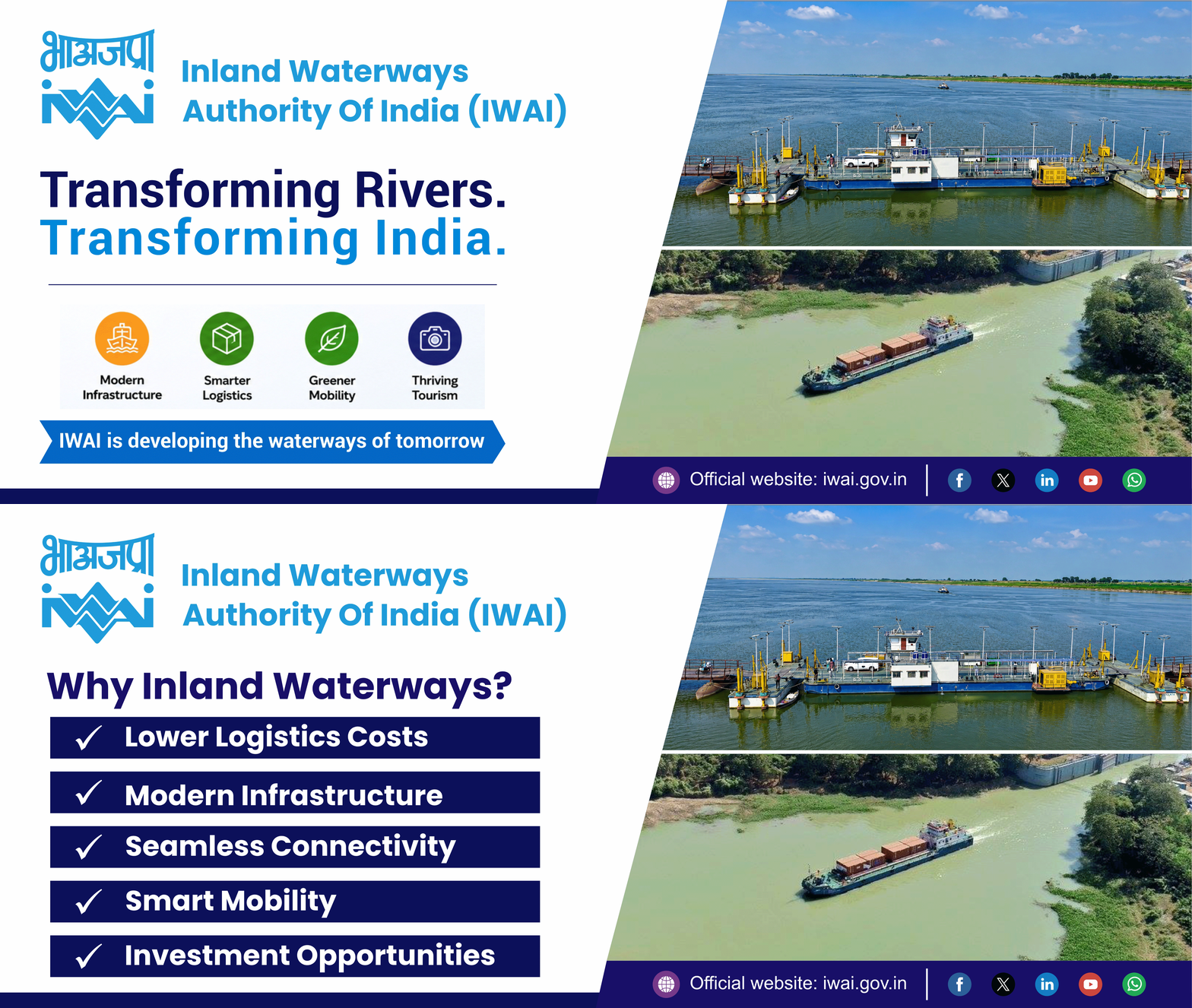
India boasts an extensive network of inland waterways, with over 145 million tonnes of cargo moved annually, offering a fuel-efficient and environmentally friendly mode of transport. Inland waterways complement the overburdened rail and road networks and facilitate initiatives such as Roll-on-Roll-off (Ro-Ro) vehicle transport and river cruise tourism. Of the total 111 National Waterways across 23 states and four union territories, 32 are currently operational for cargo and passenger movement. Inland Waterways Authority of India (IWAI) under the Ministry of Ports, Shipping and Waterways is primarily responsible for development, maintenance and regulation of these waterways.
Cargo movement on national waterways has increased from 18 million tonnes in 2013-14 to 145.84 million tonnes in 2024-25, while passenger traffic has grown to 7.64 crore in 2024-25. This momentum has been further accelerated through transformative initiatives such as the ‘Jalvahak’ Cargo Promotion Scheme, incentivising shippers to shift cargo from road and rail to waterways, and ‘Jal Samriddhi’, which promotes strong private sector participation in terminal development and operations.
“Under the visionary leadership of Prime Minister Narendra Modi, the IWDC has become a truly collaborative national platform, bringing together policymakers and representatives of various state governments and concerned departments to shape the future of inland waterways. Union Minister Sarbananda Sonowal has transformed IWDC into a catalyst for aligning Centre-State priorities, translating policy intent into actionable outcomes, and advancing a greener, more efficient transport ecosystem. By combining infrastructure development with sustainability and community participation, the Council is reviving India’s riverine heritage and repositioning inland waterways as a preferred mode of transport for cargo and passengers. In Kochi, we aim to consolidate the progress made since IWDC 1.0 in 2024 and IWDC 2.0 in 2025, accelerate project execution and scale green, technology-driven inland waterways in close partnership with states,” said Sunil Paliwal, Chairman of IWAI.