NEW DELHI (10.06.2026): In the arena of contemporary Indian politics, where margins are razor-thin and the ruling dispensation plays with a clinical, zero-tolerance ruthlessness, the grand old party of India has once again demonstrated a peculiar knack for scoring a self-goal. Meanwhile, BJP-backed independent candidate Parimal Nathwani was given time till June 10 by 11 AM to correct discrepancies in his nomination papers.
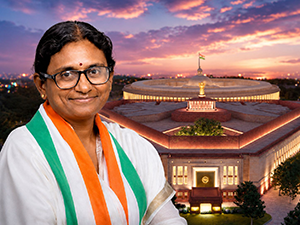
The rejection of former Lok Sabha MP Meenakshi Natarajan’s Rajya Sabha nomination from Madhya Pradesh — on grounds of non-disclosure of a pending case in a Telangana court — is an operational embarrassment for the Congress. But deeper than the immediate loss of a parliamentary seat, it reflects an institutional sloth that the party seems unable, or unwilling, to shed.
The Cost of Amateurism:
For the Congress, every single seat in the Upper House is important to remain counted. Yet, the process of vetting its candidates continues to be managed with a striking lack of professional discipline.
The party’s defense — that the matter in Telangana was merely a show-cause notice rather than a formal criminal chargesheet — may hold weight during a long-drawn legal challenge in court. But in the immediate, high-stakes theatre of an election, it displays a failure to anticipate the moves of a hyper-vigilant opponent.
This is not an isolated oversight; it is a pattern. It brings back memories of the 2024 Lok Sabha elections in Surat, Gujarat, where a signature discrepancy led to the disqualification of the Congress candidate, handing the BJP an uncontested walkover before a single vote was cast.
A Systemic Asymmetry:
The political ecosystem has transformed, and the rules of engagement are stark:
The BJP’s Playbook: The ruling party operates with an industrial-scale precision, scrutinizing the legal affidavits of its opponents for the slightest vulnerability, and moving swiftly to weaponize errors through formal objections to Returning Officers.
The Congress’s Response: The Grand Old Party frequently relies on post-facto outrage, staging sit-ins outside Election Commission offices and sleeping on the floor of the Assembly and Parliamentary, rather than deploying strict legal compliance in the first place.
While the Congress leadership points to old, distorted controversies — such as Digvijay Singh's poorly phrased "100 Taka Tanch Maal" comment years ago, which was intended as a metaphor for pure gold but twisted for political mileage — to argue that Natarajan has always been a target of malicious framing, the harsh truth remains: a cleaner, tighter affidavit would have left no room for manipulation.
The Real Casualty:
Beyond the hyper-partisan blame game, the premature exit of Meenakshi Natarajan from the Rajya Sabha race is a distinct loss to the legislative standard of Parliament.
Candidate Profile: Meenakshi Natarajan:
Grassroots Ideologue: Known for keeping an exceptionally low profile while maintaining a deep institutional memory of policy and grassroots mobilization.
Clean Public Image: Universally recognized across party lines for an unblemished career, separating her from the transactional nature of modern political actors.
Impact on Parliament:
Her absence reduces the shrinking pool of uncorrupted, policy-driven voices in the Upper House and deprives the opposition of an articulate defender of constitutional and federal values in structural debates.
When rare, principled politicians are side-lined not by the mandate of the electorate, but by a clerical error and a lackadaisical compliance check, it signals an unforced error of the highest order. The BJP will remain unforgiving of administrative lapses; it is up to the Congress to realize that in modern political warfare, paperwork is just as critical as the campaign trail. The sooner the party transitions from a culture of amateurism to corporate-grade legal scrutiny, the better its chances of survival.
(By Rakesh Ranjan)