
Must Read
In Search of Unique Safety Net: Unpredictability of Dynastic Succession and INC’s Young Generation Leaders
By IndianMandarins- 04 Jun 2026
636NEW DELHI (04.06.2026): A pragmatic paradigm shift is being witnessed in the Congress especially among those leaders who have age on their side. Giving traditional factionalism a pass, which often leads to a zero-sum attrition, young leaders as a team are adopting a "dual-alignment" strategy in view of unpredictability of dynastic succession. The Dual-Alignment Doctrine: The current power structure in the Congress is anchored by two leaders: Rahul Gandhi (RG) and Priyanka Gandhi Vadra (PGV). Though siblings present a unified front publicly, but their offices operate with different tactical styles and circles of influence drawing political authority and public acceptance from the same lineage. The emerging political class has responded by splitting into two complementary approaches designed for mutual survival: Strategic Symmetry: The first and the foremost benefit of this strategy is that it is a non-collision pact. Young leaders operate as team of two where one is positioned as a "Rahul loyalist" and the other as a "Priyanka confidant." Regardless of the fact which sibling holds the "steering wheel" or has the upper hand in exercising political command, the interest of the group remains protected. Case Study: The Diversity Hedge: Consider the recent rise of two prominent young leaders (often exemplified by figures like Gaurav Gogoi or Deepender Hooda in different contexts). Their survival strategy relies on three pillars: Implications for the Party: This model suggests that the next generation of the Congress is less interested in rebellion and is more focused on institutional stabilization. This creates a safety net that prevents the party from splintering during leadership transitions.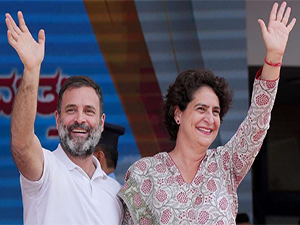












Readers' Choice
Former Gujarat Cadre IAS Appointed As Chairperson Of 7th CPC Of West Bengal
West Bengal CS Gets Six-Month Extension
A Udhayan Appointed As Principal Chief Conservator Of Forest Of TN
Police Summon Ex Top Bureaucrat Pandian Over Missing Inquiry Reports
Ashok Barnwal Appointed As Chief Secretary of Madhya Pradesh

In Search of Unique Safety Net: Unpredictability of Dynastic Succession and INC’s Young Generation Leaders
By IndianMandarins - 2026-06-04 15:08:00
NEW DELHI (04.06.2026): A pragmatic paradigm shift is being witnessed in the Congress especially among those leaders who have age on their side. Giving traditional factionalism a pass, which often leads to a zero-sum attrition, young leaders as a team are adopting a "dual-alignment" strategy in view of unpredictability of dynastic succession.
The Dual-Alignment Doctrine:
The current power structure in the Congress is anchored by two leaders: Rahul Gandhi (RG) and Priyanka Gandhi Vadra (PGV). Though siblings present a unified front publicly, but their offices operate with different tactical styles and circles of influence drawing political authority and public acceptance from the same lineage.
The emerging political class has responded by splitting into two complementary approaches designed for mutual survival:
- The RG Cohort: Focused on ideological purity, data-driven campaigning, and national "Yatra" style movements.
- The PGV Cohort: Focused on grassroots organizational revival, traditional networking, and managing critical state elections.
Strategic Symmetry:
The first and the foremost benefit of this strategy is that it is a non-collision pact. Young leaders operate as team of two where one is positioned as a "Rahul loyalist" and the other as a "Priyanka confidant."
Regardless of the fact which sibling holds the "steering wheel" or has the upper hand in exercising political command, the interest of the group remains protected.
Case Study: The Diversity Hedge:
Consider the recent rise of two prominent young leaders (often exemplified by figures like Gaurav Gogoi or Deepender Hooda in different contexts). Their survival strategy relies on three pillars:
- Intentional Proximity: Leader A maintains strong ties with RG’s office, while Leader B coordinates closely with PGV’s team.
- Diverse Political Remits: By choosing vastly different areas of expertise—one focusing on legislative strategy in Delhi and the other on regional caste alliances which negates the risk of "clash of interests."
- Long-term Continuity: Proximity to both power centres ensures that their collective influence remains steady in case of any change in the party’s central hierarchy.
Implications for the Party:
This model suggests that the next generation of the Congress is less interested in rebellion and is more focused on institutional stabilization. This creates a safety net that prevents the party from splintering during leadership transitions.