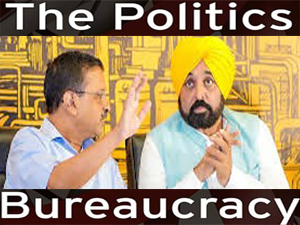
New Delhi (15.10.2025): A profound sense of professional unease has gripped the Punjab bureaucratic apparatus, with several IAS officers actively seeking No-Objection Certificates (NOCs) to move to Central Deputation. One may witness an acute career anxiety amid an administrative environment perceived as paralysed and managed by extra-constitutional political power centres operating out of Delhi.
Over eight to ten IAS officers including; Tejveer Singh (PB: 1994), Dilip Kumar (IAS: 1995), S Awhad Nilkanth (IAS: 1999), Alaknanda Dayal (PB: 2000), Zade Vijay Namdeorao (IAS: 2002) including others are keenly awaiting NOC from the state government. Their primary fear is not merely the current postings, but the jeopardised prospects for crucial empanelment as Additional Secretary and Secretary in the Government of India—a necessary milestone that requires central experience. The inability to secure these NOCs is seen as stagnation, cementing Punjab’s reputation as an administrative "graveyard."
Moreover, numerous others are awaiting posting for more than 5-7 months namely; Gurkirat Kirpal Singh (IAS: 2001), Puneet Goel, K P Brar, Pramjit Singh, Paramvir Singh.
The Paralysis of Power:
A large section of bureaucrats maintains that Punjab is at a critical juncture where the delicate balance between the formal power structure (the Chief Minister's office and the Chief Secretary) and the actual centres of influence is entirely skewed. The Chief Minister is widely perceived as unable to take decisive administrative calls.
Adding to the complexity, AAP’s national convenor Arvind Kejriwal and Rajya Sabha MP Raghav Chadha, who hold firm control over state matters, are reportedly unavailable or inaccessible, leading to bottlenecks and a breakdown in timely decision-making. The Chief Secretary, even if not entirely weak, is seen as fundamentally helpless in lobbying for his peers' professional movement, including the pending NOCs. Furthermore, several experienced IAS officers have been kept waiting for assignments for months, and some are still without posting, reflecting a deeper administrative malaise.
The Delhi Proxy Rule:
Bureaucrats now draw a sharp distinction between the governance model in Punjab and that of West Bengal—another state often criticised for its treatment of the bureaucracy. Officials argue that while in West Bengal, the CM takes the final call on all crucial administrative matters, in Punjab, the administration is allegedly run largely by a dedicated contingent of political affiliates of AAP, who have moved their base from the Capital to Chandigarh to ensure full command.
This arrangement has established a de facto parallel power structure. For example, Bibhav Kumar, a former aide to then-Delhi CM Kejriwal, is reportedly dubbed the "super chief secretary" in the corridors of power. Insiders claim he holds decisive sway over personnel matters, with many civil servants looking to him for their fate and career assignments. Similarly, Jasmine Shah, who once served as the vice-chairperson of the Delhi Dialogue and Development Commission (DDC), is claimed to be a key gatekeeper, with cabinet notes reportedly not moving forward without his nod which is in gross violation of the Official Secrets Act.
This proxy rule, sources indicate, is the root cause of the current administrative churn, fostering an environment where bureaucratic efficiency takes a backseat to political directives from outside the constitutional state framework.
(By Rakesh Ranjan)
ALSO READ: